
Recently, I was asked by one of my industry colleagues: “why have you stopped posting your articles on LinkedIn?”
It’s a fair question. For years, LinkedIn was the digital town square for professionals – a place to share industry insights, debate strategic trends, and occasionally pretend we all read 300-page market reports over morning coffee.
So, before answering, I decided to log on and audit my main feed just to check my suspicions still held true – but also somewhat hopeful I’d be greeted by some sharp commentary on agency pitch dynamics, marketing efficiency, or organizational strategy.
Instead, here is the exact lineup of professional enlightenment LinkedIn’s algorithm served me in a matter of two minutes:
The Line-Up
• A story about an overweight orange cat – presumably teaching us key lessons on corporate agility and caloric management?
• A video about rope and scaling tall buildings. Perhaps a metaphor for climbing the corporate ladder? Or just urban rappelling? (Actually, I think it was an ad for something…)
• A rant about British Airways loyalty (or lack thereof) – because nothing says B2B networking like public air travel grievances and stories.
• A video of US teachers locking doors with classroom chairs.
• A video of someone diving off an iceberg (truly the ultimate cold outreach..)
• A video of a Chinese border police officer recognizing his mother’s cooking in one bite.
• A story about someone rowing across the Pacific looking for followers (I’m not kidding)
And somewhere buried in that surreal digital swamp, sat one solitary piece of relevant industry news – an article about Omnicom winning the Coca-Cola account. It looked lost, bewildered and wondering how it ended up flanked by icebergs and an overweight orange cat.
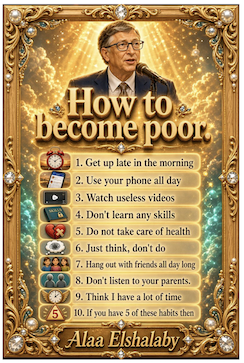
It’s bad. And I’ve not even mentioned the endless stream of financial advisors reaching out to ask about managing my vast (not!) financial portfolio. Perhaps it was this post that was also lurking on my feed that inspires them to send invites…?
The Great Dilution
LinkedIn hasn’t just evolved; it has suffered a total identity crisis. What was once a tailored professional forum has steadily mutated into a strange hybrid of TikTok viral clips, Reddit rants, and Facebook family updates – many of which are retrofitted with forced “leadership takeaways…”
Where we once shared thoughtful analysis, the feed is now dominated by high-drama storytelling and engagement bait:
• “I got fired today. Here are 5 things it taught me about B2B SaaS sales…”
• “Watch this cat open a door. What does this teach us about seamless UX design?”
• “Here’s a video of someone doing something wildly dangerous – agree or disagree?”
When serious, substantive commentary is pushed to the bottom of the pile in favour of sensationalism and shock-value engagement, publishing high-value content starts to feel like trying to deliver a keynote speech inside a circus tent.
Signals vs. Noise
Content platforms thrive on relevance. When signal-to-noise ratios collapse, the value proposition for serious contributors vanishes.
I believe that when professionals publish analysis, thought leadership, or industry perspectives, they rely on a context where that information can be evaluated, debated, and applied. When that context is replaced by algorithmic dopamine farming, publishing thoughtful content becomes an exercise in shouting into a void of cat memes and viral stunts.
For the record, I haven’t stopped writing. Far from it. I’ve simply chosen to direct my writing toward channels where substance still matters, where conversations are focused and where the audience comes to engage with real industry issues rather than jumping off iceberg videos.
Until LinkedIn remembers that it’s supposed to be a professional network rather than a viral video repository, I’ll be limiting my insights to places where they won’t get buried under an overweight cat’s daily routine.
By all accounts I’m not alone in my views on how badly LinkedIn has seemingly lost its way. …What do you think? Has your feed become a digital circus, too? Or do I just need to interact with more iceberg-jumping videos to fix my algorithm?
Drop your thoughts below – or just share your favourite orange cat meme. At this point, I can’t tell the difference anyway.
Stephan Argent
Stephan Argent is Founder and Principal at Listenmore Inc, Canada’s leading confidential advisory consultancy that specializes in Agency Search Management. Read more like this on our blog Marketing Unscrewed / follow me @StephanArgent